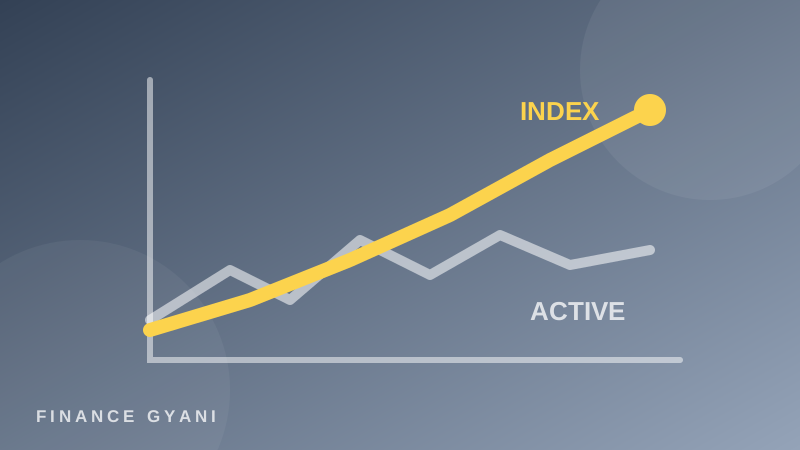
An index fund simply copies a market index like the Nifty 50 — it owns the same 50 stocks in the same proportions, no opinions involved. An active fund pays a manager and research team to pick stocks and try to beat that index. The question every investor eventually asks: is the manager worth their fee?
The three things that actually differ
1. Cost
Index funds in India charge roughly 0.1–0.3% a year; active equity funds often charge 0.7–1.5% even in direct plans. A 1% annual difference sounds trivial — it isn’t. On a ₹10,000 monthly SIP over 25 years, that gap alone can shave tens of lakhs off your final corpus, because the fee compounds against you every single year.
▶ Latest from the Finance Gyani YouTube channel
2. Performance
The manager has to beat the index after fees, every year, for decades. The SPIVA India scorecards (S&P’s long-running study) have consistently shown that a large majority of active large-cap funds underperform their benchmark over 10-year periods. Some managers do win — the hard part is that you must identify them in advance, and past winners frequently become future laggards.
3. Behaviour
This one is underrated. Active fund investors constantly face decisions: my fund is lagging — switch? The star manager left — exit? Every decision point is a chance to make a behavioural mistake. An index fund removes the decisions: there’s no manager to lose faith in, nothing to switch to. Boring is the feature.
The honest case for active funds
It’s not all one-sided. In less-researched corners of the market — mid-caps, small-caps — skilled managers have historically had better odds of adding value than in large-caps, where information is efficient. If you go active, do it there, with a small slice of your portfolio, and give the manager a full market cycle (5–7 years) before judging.
A sensible default portfolio
| Slice | Allocation | Why |
|---|---|---|
| Nifty 50 / Sensex index fund | Core (60–80%) | Cheap, diversified, no manager risk |
| Nifty Next 50 or midcap fund | Satellite (10–25%) | Extra growth potential, more volatility |
| Debt / liquid funds & FDs | Per your horizon | Stability, near-term goals |
For most people, most of the time, a low-cost index core plus consistent SIPs captures nearly all the benefit of equity investing with a fraction of the effort. See our SIP beginner’s guide to put this into practice.
Key takeaways
- Index funds copy the market at ~0.1–0.3% cost; active funds must beat it after ~1%+ fees.
- Most active large-cap funds underperform their index over long periods.
- Fewer decisions = fewer behavioural mistakes — a real, if unglamorous, edge.
- If you want active exposure, keep it a small satellite in mid/small-caps.
Educational content only, not investment advice. Mutual fund investments are subject to market risks.